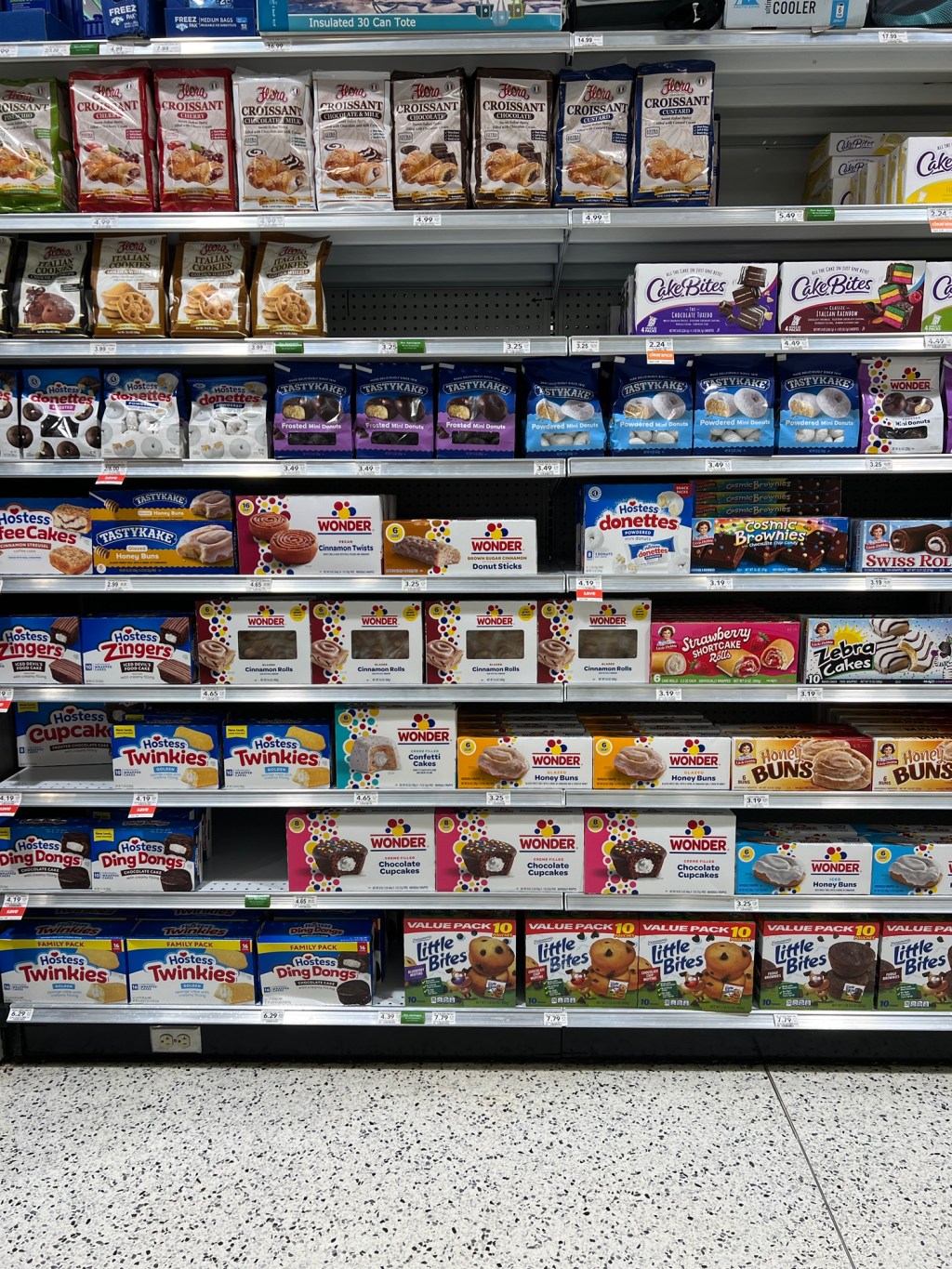
For many Americans who came of age in the late 1980s and 1990s, Little Debbie snacks were less a food than a fixture. Swiss Rolls, Cosmic Brownies, and Zebra Cakes occupied a permanent place in kitchen cabinets and school lunch boxes, standing in as rewards, comfort, and routine. They were a beloved fixture for most after little league games when your effort on the field was rewarded as a 12 year old with a Little Debbie Fudge Round and a bottle of Gatorade.
This dominance of America’s most beloved junk food snacks has quietly come to an end.
For many, you likely can’t remember the last time you picked up a box of Little Debbie snacks. You probably couldn’t place which aisle these once coveted snacks are even located. Over the past two decades, American attitudes toward food have undergone a profound shift, one that is generational as much as nutritional. Millennials, now raising families of their own, are making health decisions that often run counter to those of their Baby Boomer parents and grandparents. Where earlier generations embraced convenience, shelf stability, and brand familiarity, Millennials have grown skeptical of the industrial food system that produced those values. What was once a steady staple is now framed as excessive, artificial, or even irresponsible as a food choice.
This skepticism has shown in the way consumers shop throughout their local grocery stores. Many Millennials deliberately avoid the middle aisles of the grocery store, long dominated by boxed, sugary, and heavily processed foods. Instead, they cluster along the perimeter, filling carts with produce, fresh proteins, and refrigerated alternatives. It is a quiet but meaningful departure from the shopping habits of their parents, for whom those aisles represented progress, affordability, and modern living. Ingredient lists are no longer ignored. They are interrogated. Grocery chains, like Trader Joe’s have gone as far to embrace this shift in shopping habits by designing stores that cater to perimeter shoppers.
The scrutiny of processed foods has proven especially unforgiving for the snack cakes that once defined a generation. As NPR has reported, ingredient transparency and the desire for natural organic foods have led younger shoppers to pass over the traditional snack cakes in favor of trendy health snacks. Terms that were once obscure, such as high fructose corn syrup, artificial coloring, and hydrogenated oils, now function as cultural shorthand for a food system many millennials have learned to distrust.
The organic and clean label movements did not merely introduce alternatives. They recast the guide to healthy eating. Food became a reflection of values, including environmental concern, parental responsibility, and self control. In this framework, snack cakes came to represent not just sugar and fat, but a bygone era of industrial excess. According to Food Dive, consumers’ demand for cleaner labels and healthier options has driven a steady decline in sales of iconic snack cakes, a trend that reflects not a single fad but a broader reordering of priorities.
In recent years, a new influence on American diet has entered the equation – one that does not merely discourage indulgence but actively suppresses it. GLP 1 drugs such as Ozempic, Wegovy, and Mounjaro, originally developed to treat type 2 diabetes, have rapidly spread into mainstream use as weight loss and metabolic health treatments. By design, these medications reduce appetite, slow digestion, and blunt cravings. As a result, eaters who had become addicted to sugary and highly processed foods now had the ability to curb appetites and their food preferences.
For millions of users, the effect is not just fewer calories consumed but a fundamental change in desire. Foods that once felt irresistible now feel excessive or unnecessary. Snacking becomes sporadic. Portions shrink. The urge to graze between meals fades. In this context, products like Swiss Rolls and Cosmic Brownies face a challenge that nostalgia alone cannot solve. It is difficult to sell indulgence to consumers who no longer experience it as rewarding or find eating prepackaged food from a box enticing.
The impact is increasingly visible in consumer spending patterns. Households with GLP 1 users purchase fewer snacks, fewer baked goods, and fewer impulse items. The center aisles of the grocery store, long designed around volume consumption, become easier to bypass altogether. Appetite itself is changing, and with it the economic assumptions that once sustained the packaged food industry.
Retail shelves tell the story plainly. Where snack cakes once dominated, protein bars, reduced sugar cookies, and wellness branded foods now compete for attention. Meanwhile, legacy brands face an uncomfortable dilemma. Reformulate and risk alienating loyal customers, or stay the course and risk irrelevance. As The Washington Post has noted, industry experts acknowledge brands like Little Debbie are struggling to adapt as consumers demand fewer additives and less sugar, demands that cut directly against what made these snacks popular in the first place.
Large food companies are not ignoring the threat. Instead, they are attempting to adapt to a world in which appetite itself is changing. Many are reformulating products with higher protein and fiber, investing in portion controlled packaging, or acquiring “better for you brands” to hedge against declining sales of legacy products. Some have begun marketing foods as compatible with GLP 1 lifestyles, emphasizing satiety and nutritional density over indulgence. The strategy is defensive but pragmatic: meet consumers where their appetites are going, not where they once were.
For companies like McKee Foods that owns Little Debbie, this moment represents more than a temporary sales slump. It is a confrontation with the logic that sustained them for decades. Snack cakes were built for an era in which abundance was a virtue, portion control was optional, and eating between meals was not yet framed as a problem to be solved. Their success depended on repetition, habit, and emotional familiarity.
That system is now under pressure from multiple directions at once. Millennials increasingly avoid the aisles where these products live. GLP 1 users no longer crave them in the same way. The emotional loop that sustained the category, desire followed by indulgence followed by repetition, is weakening. Nostalgia still resonates, but resonance does not guarantee consumption.
What makes this moment distinctive is not any single trend, but the convergence of many. Baby Boomers and Millennials are not merely buying different foods. They are operating from different assumptions about what food is for. GLP 1 drugs have intensified this divide by altering appetite at the biological level, turning what was once a cultural shift into a physiological one. Little Debbie sits at the center of this transformation not because it is uniquely vulnerable, but because it has become synonymous with a genre of forgotten foods.
None of this suggests that snack cakes will disappear entirely. Indulgence will always find a market. But ubiquity is different from survival. A product can persist without reigning. What is fading is not the taste of a Cosmic Brownie, but the assumption that it belongs, unquestioned, in every pantry.
The end of the Millennial staple, then, is not a rejection of the past so much as a reordering of priorities. It reflects a culture in which appetite is managed, health decisions diverge across generations, and the foods that once defined childhood comfort must now compete in a world that no longer eats the way it used to. The shift is quiet, gradual, and deeply structural. To the companies that once profited most from the middle aisles, it may prove to be the most consequential change of all.
 The Millennial
Leave a comment